
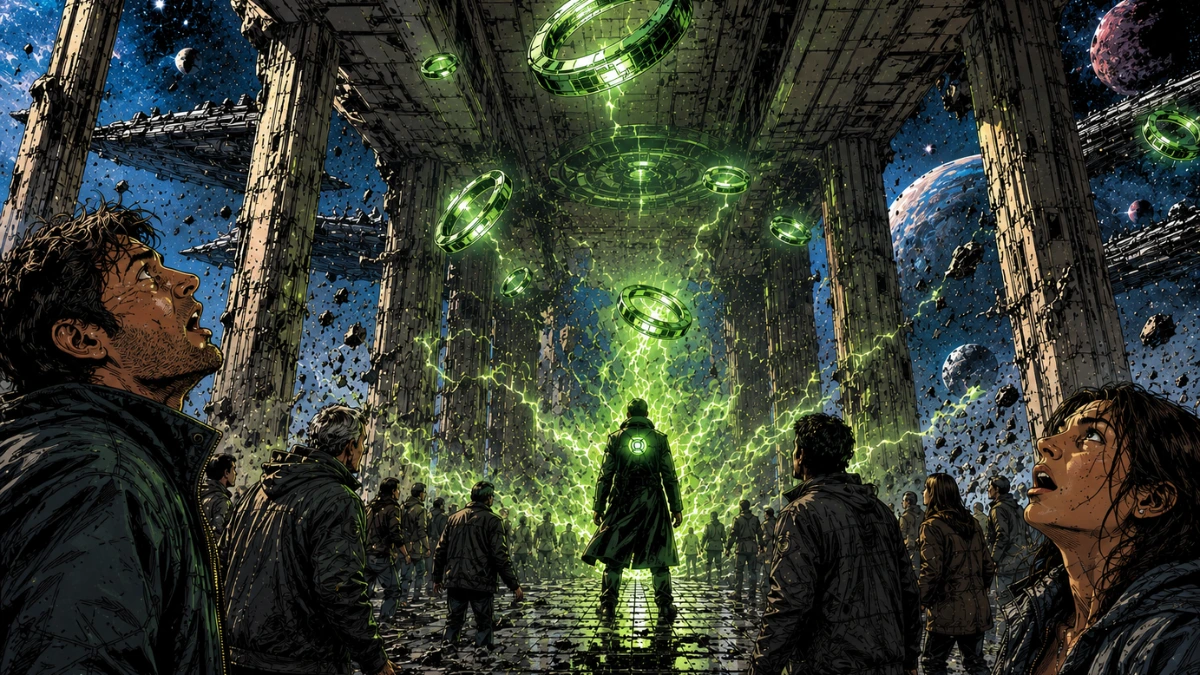
Most audiences still think the Green Lantern is just “the guy with the glowing ring.” But the deeper you go into DC lore, the stranger and more ambitious it becomes. The franchise isn’t really about one superhero at all. It’s about an intergalactic police force spread across thousands of sectors in the universe, powered entirely by willpower and imagination.
That’s probably why Green Lanterns have survived for so many decades even when some adaptations failed. Underneath the space visuals, Green Lantern stories are usually about fear, responsibility, ego, trauma, courage, and the burden of carrying impossible power. And now, with HBO’s upcoming Lanterns series suddenly getting attention again, a lot of people are rediscovering just how massive this corner of DC actually is.
The Green Lantern Legacy Is Much Older And Weirder Than Many People Realize
The first Green Lantern was not Hal Jordan. It was Alan Scott, introduced back in 1940 during the Golden Age of comics. His powers originally came from mystical energy connected to something called the Starheart rather than sci-fi alien technology. Later, DC completely reinvented the concept in 1959 by introducing Hal Jordan, the version most mainstream audiences recognize today. That reinvention shifted Green Lantern from fantasy into full science fiction.
Hal Jordan became a member of the Green Lantern Corps after receiving a power ring from a dying alien officer. From there, DC built one of its largest organization: thousands of Lanterns protecting sectors across space under the guidance of the Guardians of the Universe on the planet Oa. The rings can create constructs out of green energy, limited mostly by imagination and mental strength.
And honestly, that imagination becomes reality concept is still one of the coolest powers in comics. Some Lanterns create giant weapons, others create detailed machines, armor, dragons, jets, cities, or abstract energy forms. The best Green Lantern stories often feel less like superhero fights and more like psychological battles between confidence and fear.
Earth Somehow Ended Up With An Absurd Number Of Green Lanterns
One thing that longtime fans always joke about is how Earth somehow became overloaded with Lanterns despite sectors supposedly needing only limited representatives. Over time DC introduced multiple Lanterns of Earth including Hal Jordan, John Stewart, Guy Gardner, Kyle Rayner, Simon Baz and Jessica Cruz.:
| Character | Personality type |
|---|---|
| Hal Jordan | Fearless but reckless test pilot energy |
| John Stewart | Calm, disciplined, tactical leadership |
| Guy Gardner | Loud ego-driven chaos and attitude |
| Kyle Rayner | Artistic imagination and emotional storytelling |
| Jessica Cruz | Anxiety and fear overcoming personal trauma |
That variety helped Green Lantern avoid becoming stale across generations. Some readers prefer cosmic war stories, others prefer grounded emotional arcs. DC basically turned the title into a rotating legacy franchise long before cinematic universes became mainstream.
The Comics Quietly Became One Of DC’s Most Important Creative Experiments
A huge reason Green Lantern remained influential is because DC kept using the franchise to experiment with tone and themes. The famous Green Lantern/Green Arrow run from the 1970s tackled racism, addiction, corruption, and political frustration in ways superhero comics rarely attempted at the time.
Then later storylines expanded the emotional spectrum itself. That’s part of why fans still defend the franchise so aggressively even after the 2011 movie damaged its reputation. The actual comic storylines are far richer than most adaptations have shown so far.
And now HBO’s Lanterns seems to understand that. Instead of leaning fully into colorful cosmic spectacle, the new show reportedly treats the Green Lanterns more like detectives investigating an earthbound mystery while still keeping the larger sci-fi mythology alive in the background. That idea still feels surprisingly fresh compared to a lot of modern superhero content.
The emotional core of Green Lantern has always been internal pressure: overcoming fear, living up to expectations, resisting corruption, and trying not to mentally collapse while wielding near-godlike power. A slower and more grounded structure could finally let those ideas breathe properly instead of rushing from explosion to explosion.

Sujal Singh is the Founder and Editor of CineMazze. He covers film news and updates, including casting, production and release announcements, and manages the website. Follow him on Instagram: @itssujalsingh.