Disney has spent the past decade turning many of its animated classics into live-action films.
Some became massive hits.
Others struggled to justify their existence.
With Moana, the critical response is considerably more divided. Catherine Laga’aia has emerged as one of the remake’s strongest elements, while the film itself has been criticized for sticking so closely to the 2016 animated original that it rarely develops an identity of its own.
Rotten Tomatoes currently has Moana at 32% from 197 critic reviews, with its consensus calling the new version underwhelming and arguing that the animated original remains the superior adventure.
But that isn’t the whole story. Variety’s Owen Gleiberman was far more enthusiastic, calling it “the best” Disney live-action remake he had seen and praising both Laga’aia and Dwayne Johnson.
So the reception isn’t simply “Moana is bad.” The more interesting divide is over whether Disney has found a way to make this particular remake worthwhile.
Catherine Laga’aia Emerges As The Bright Spot
One of the clearest positives across the reviews is Catherine Laga’aia.
The Australian Samoan actress makes her screen debut as Moana, taking over a role that was already deeply associated with Auli’i Cravalho’s animated performance.
Rotten Tomatoes’ roundup of the first reviews specifically highlighted Laga’aia, noting that she “shines in the lead.”
India Today’s Sana Farzeen was similarly positive, calling Laga’aia a “wonderful Moana” and praising the innocence and determination she brings to the character.
Variety’s Owen Gleiberman went even further, singling out Laga’aia’s rendition of “How Far I’ll Go” and describing her performance as one of the reasons the remake works.
That gives the film a genuine advantage. Laga’aia doesn’t come across as someone simply imitating the animated version. She gives Moana her own warmth and presence.
The problem is that the rest of the movie doesn’t always give her enough new material to work with.
Critics Say The Original’s Magic Is Missing
The most consistent criticism concerns the remake’s familiarity.
Rotten Tomatoes’ first-reviews roundup quotes Collider’s Taylor Gates saying that everything the remake does well, the 2016 version already did better, while TheWrap’s William Bibbiani described the film as arguably Disney’s most redundant live-action remake.
The Los Angeles Times’ Amy Nicholson was considerably harsher. She argued that the live-action production loses the sense of magic that made the animated film work, particularly because so much of the new movie depends on CGI surrounding its human performers.
The Guardian’s Peter Bradshaw reached a similar conclusion, calling the film competent but “basically pointless and unexciting.” He also argued that the enormous amount of CGI makes the supposedly live-action movie feel like another animated production.
That criticism gets to the heart of the remake problem.
The plot is already strong. The songs are already popular. The characters are already beloved.
When the new version follows the same path without substantially changing the experience, the question naturally becomes: what exactly are audiences getting that they didn’t already have?
Dwayne Johnson’s Return Isn’t Receiving The Same Enthusiasm Everywhere
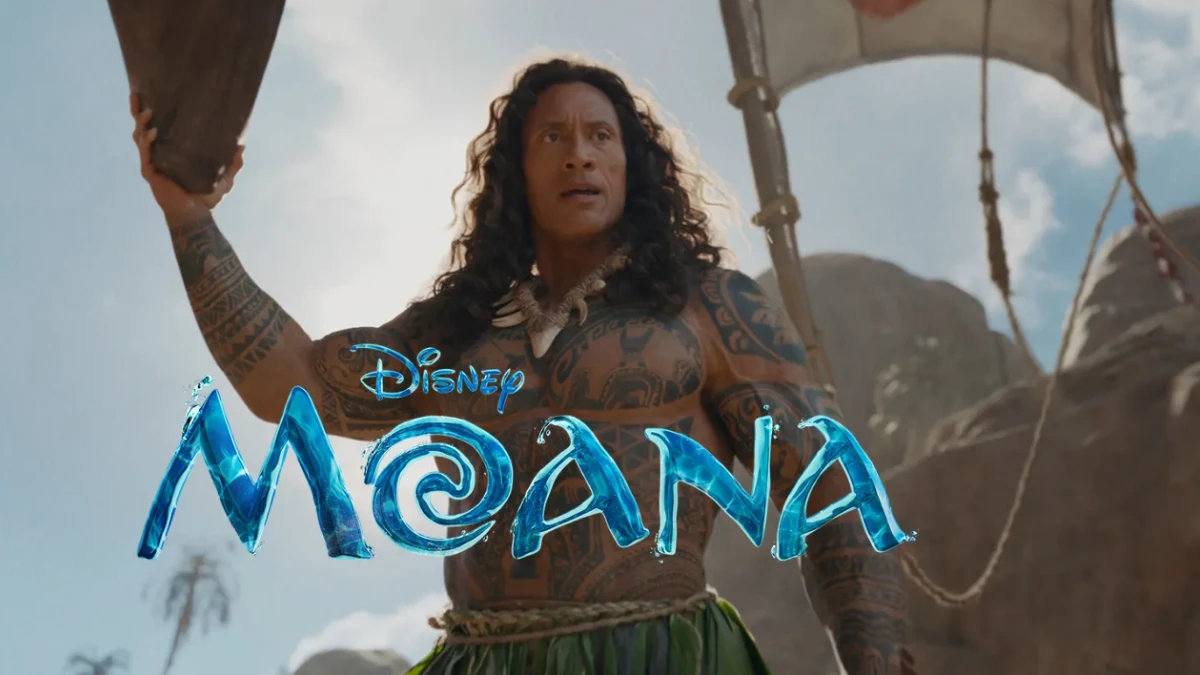
Dwayne Johnson reprises his role as Maui, which makes Moana somewhat unusual among Disney remakes. The actor isn’t replacing the original voice performance — he’s physically stepping into the same character.
The response has been mixed, although not universally negative.
Variety’s Owen Gleiberman loved the casting choice, arguing that Johnson was essentially a stylized version of the animated Maui already, making the transition into live action surprisingly natural. He praised Johnson’s chemistry with Laga’aia and described their clash of personalities as the dramatic heart of the film.
Peter Bradshaw at The Guardian was less impressed. He acknowledged that Johnson has funny moments and good rapport with Laga’aia, but felt the actor was operating on “autopilot.”
India Today’s review lands somewhere between those positions. Sana Farzeen argues that Johnson’s Maui does much of the heavy lifting, while Laga’aia gives the film the sincerity it needs.
So Johnson isn’t really the film’s consensus problem. His performance depends heavily on how much a reviewer thinks the original Maui needed to be recreated in the first place.
The Bigger Issue May Be Disney’s Live-Action Formula
This is where Moana becomes part of a much larger Disney conversation.
Rotten Tomatoes’ review roundup includes several critics questioning the entire purpose of the remake. Empire’s John Nugent called Moana one of Disney’s most obviously unnecessary recent remakes, while Screen International’s Tim Grierson argued that these flashy recreations can suppress the charm found in the original animated films.
Time Out’s Phil de Semlyen was even more direct, describing the remake as a “pointless” transplant that struggles to recreate the freshness of the animated movie.
Yet Variety provides an important counterargument.
Gleiberman also thinks the remake is unnecessary in principle, but believes Moana works better than most Disney remakes because its combination of live actors, CGI and animation-style visuals creates a distinctive enough world to justify itself.
That’s probably the fairest way to look at the film.
The question isn’t whether Disney copied the original. It clearly did.
The question is whether the copy is enjoyable enough to stand beside it.
Some critics think it is. Others don’t.
Why The Film Could Still Find An Audience
Critical reviews don’t automatically determine commercial success.
Moana has a major advantage that many original films would love to have: audiences already know the characters, songs and story. Families who grew up with the 2016 movie don’t need to be convinced that Moana and Maui are worth spending two hours with.
The audience response has also been considerably warmer than the critical reception. Rotten Tomatoes currently lists an 88% Popcornmeter score from verified audience ratings, compared with the 32% Tomatometer score.
That gap is worth watching.
It suggests that viewers who simply want to revisit the story may be much more forgiving of the remake’s similarities than professional reviewers looking for a reason for the movie to exist.
A Movie Facing Unusually High Expectations
Perhaps the hardest part of making Moana wasn’t recreating the story.
It was following Moana.
The 2016 animated film was already a modern Disney favorite, with acclaimed songs, a strong central character and a visual style that made the ocean itself feel alive.
The live-action remake was always going to be compared with that version.
And the reviews show just how divided that comparison has become.
Variety sees a remake that works surprisingly well. The Guardian and Los Angeles Times see a production that loses much of the original’s magic. Rotten Tomatoes’ overall score currently leans heavily toward the latter view, while the audience score tells a noticeably different story.
Catherine Laga’aia appears to have cleared the hardest hurdle: convincing viewers that she can be Moana.
The harder sell is convincing them that they needed to meet her again in live action.