
Harlan Coben adaptations have never been known for subtlety. They are built on impossible twists, secret identities, shocking revelations, and plots that become increasingly chaotic with every episode.
Netflix’s I Will Find You follows that formula almost proudly.
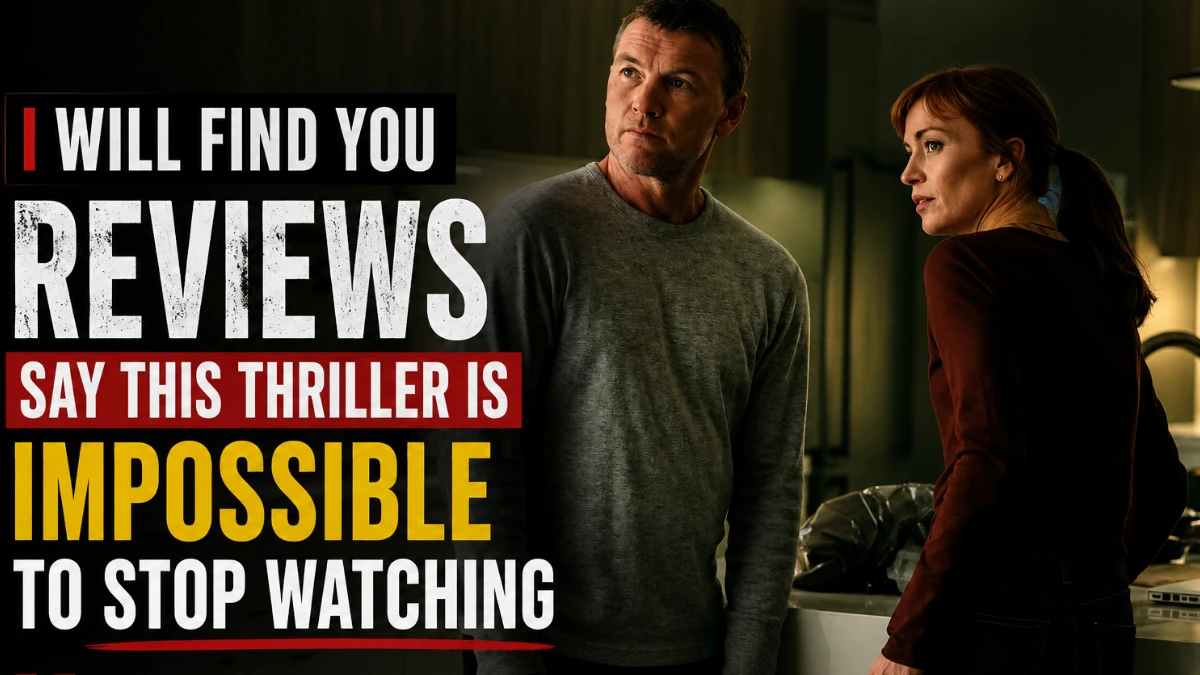
The eight-episode thriller stars Sam Worthington as David Burroughs, a man serving a life sentence for murdering his young son. Years later, a photograph appears to suggest that the child may still be alive, pushing David toward a desperate escape and a search for the truth.
The mystery quickly expands into conspiracies, hidden agendas, family secrets, and revelations that test the limits of credibility.
The reviews are divided on whether the series turns that absurdity into effective entertainment. Ashley Hurst of What’s on Netflix, reviewing the show on June 18, 2026, gave it four out of five stars and praised its “fantastic performances,” action, and gripping mystery. Anisha Rao of India Today, writing on June 22, called it messy and implausible but “addictive” and “impossible to quit.”
Other critics were considerably harsher. Jesse Hassenger of TheWrap described the series as a generic thriller that gives Worthington and Britt Lower too little material to work with. Brian Tallerico of RogerEbert.com went further, calling it one of the weakest examples of the Harlan Coben formula and arguing that it is more suited to second-screen viewing than focused attention.
The result is a show that knows exactly how to keep a viewer moving through episodes, even when the story becomes increasingly difficult to defend.
Netflix Knows Exactly What It Is Selling
The most revealing review may come from Sarah Dempster of The Guardian, who described I Will Find You as “maddeningly watchable” while criticizing its formulaic plotting and artificial dialogue.
That combination captures the series better than a simple “good” or “bad” verdict. The show is not trying to be a carefully constructed prestige mystery. It is designed to keep introducing another secret before the previous one has had time to settle.
The structure is familiar: a seemingly impossible crime, a protagonist who has been misunderstood, people hiding crucial information, and a chain of revelations that repeatedly changes the audience’s understanding of the case.
Anisha Rao’s India Today review makes a similar point. She argues that the series often allows logic to take a back seat whenever another twist is waiting, but still maintains enough momentum to make the next episode difficult to resist.
That is probably the fairest way to approach I Will Find You. It is not especially interested in whether every development would survive serious scrutiny. It wants the next revelation to arrive before the viewer has finished questioning the last one.
Sam Worthington Carries the Story
Sam Worthington plays David as a man trapped between grief, guilt, desperation, and determination. The role requires him to remain emotionally grounded while the plot around him becomes increasingly elaborate.
Ashley Hurst of What’s on Netflix praised Worthington’s performance and argued that he gives the series a strong emotional center. Sajin Shrijith of The Week similarly described Worthington as compelling, particularly in the way the story uses David’s search to explore fatherhood, loss, and family relationships.
Not every critic agreed that the performance was enough to save the material.
Jesse Hassenger of TheWrap argued that Worthington and Britt Lower are better than the material they have been given. His criticism is not that the actors lack commitment, but that the script repeatedly pushes them through familiar thriller machinery without giving the characters enough depth to make every development land.
Britt Lower’s Rachel Mills also receives attention. She plays David’s disgraced journalist sister-in-law, who becomes involved after discovering evidence that challenges the official version of David’s son’s death.
Even critics who disliked the overall series have found Lower’s performance more layered than the surrounding material.
The Twists Are the Attraction—and the Problem
The show’s central premise is already extreme: a father convicted of murdering his son discovers that the child may still be alive.
From there, I Will Find You adds prison corruption, hidden identities, suspicious institutions, secret agendas, and increasingly unlikely connections.
For The Guardian’s Sarah Dempster, the result is classic Coben television: full of “fists and mumbling,” melodramatic revelations, and plotting that seems to have been designed to keep the viewer permanently off balance.
The Wall Street Journal, in the review summarized by Hindustan Times, also criticized the show’s contrived conspiracy structure and “typically ludicrous plotting.” The review argues that the series creates a maze of hostile plotlines without always providing convincing reasons for the characters’ decisions.
That is where the series becomes a matter of taste. If you enjoy thrillers that constantly escalate, the twists are part of the fun. If you expect mysteries to reward close attention with logical explanations, the same twists can become exhausting.
Why Harlan Coben Fans Will Probably Enjoy It
The most positive reviews suggest that I Will Find You succeeds by embracing the formula rather than trying to disguise it.
Hurst’s review for What’s on Netflix argues that the show is not especially original and does not hold up as well on a second viewing, but still delivers a strong first ride through its mystery, action, and performances.
That is a useful distinction. The series may not be the kind of thriller viewers revisit to admire its construction. It is the kind they watch quickly because every episode ends by demanding another.
The familiar ingredients are all present: missing people, family secrets, false assumptions, conspiracies, hidden identities, and revelations that completely change what viewers think they know.
For longtime Coben viewers, those elements are not unexpected. They are the product.
The Real Question Is Whether You Can Stop Watching
The critical disagreement is less about the show’s basic identity than about whether that identity is enough.
Brian Tallerico of RogerEbert.com argued that the series is not even particularly successful as “dumb fun,” calling it boring despite its attention-grabbing premise. TheWrap’s Jesse Hassenger found it watchable but generic, while India Today’s Anisha Rao considered its implausibility part of its strange appeal.
That leaves I Will Find You in a familiar Netflix thriller category: easy to start, difficult to defend, and often difficult to stop watching.
It is not a carefully engineered mystery, and viewers looking for realism or subtle character work may find it frustrating. But if the goal is an aggressively plotted binge filled with reversals, prison escapes, family secrets, and increasingly outrageous revelations, the series understands the assignment.
The verdict depends on how much disbelief a viewer is willing to suspend. I Will Find You may not be the strongest Harlan Coben adaptation, but it is recognizably his—and for some viewers, that will be enough.

Sujal Singh is the Founder and Editor of CineMazze. He covers film news and updates, including casting, production and release announcements, and manages the website. Follow him on Instagram: @itssujalsingh.