Most superhero projects now chase the same formula—nonstop CGI, fast jokes, multiverse references, and scenes that feel designed for TikTok clips before the episode even releases. Spider-Noir takes a very different route.
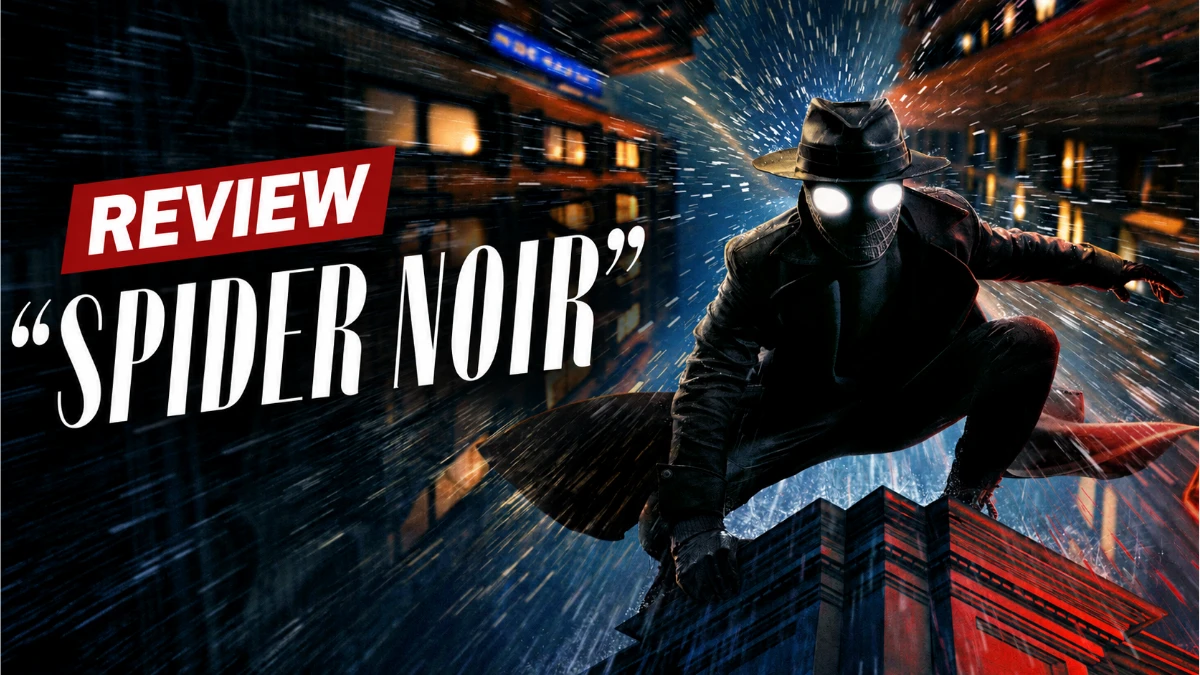
Amazon MGM’s eight-episode series, which premiered on May 25, 2026, places Nicolas Cage’s Spider-Man in a dark, Depression-era version of New York filled with gangsters, corruption, strange powers, and hard-boiled detective dialogue. The show is available in two formats: “Authentic Black and White” and “True Hue Full Color.”
The concept could have been a gimmick. Instead, several critics found that the visual experiment gives Spider-Noir a distinct identity, even when the writing struggles to match its atmosphere. Rotten Tomatoes’ first-review roundup, published by Christopher Campbell on May 22, 2026, described the series as a bold and visually inventive change of pace, while noting that its central mystery can become unfocused.
Nicolas Cage Turns Ben Reilly Into A Broken Private Investigator
The most important clarification is also one of the show’s biggest departures from familiar Spider-Man mythology: Nicolas Cage is playing Ben Reilly, also known as The Spider, rather than Peter Parker.
In Spider-Noir, Ben is an older, down-on-his-luck private investigator operating in 1930s Manhattan. He has already experienced the consequences of being a superhero and now spends much of his time trying to avoid returning to that life. His Spider-Sense is connected to recurring migraines, while his emotional state is shaped by grief, guilt, and exhaustion.
RogerEbert.com’s Richard Roeper praised Cage for finding the right balance between old-Hollywood detective performance and eccentric comic-book energy. Roeper highlighted Cage’s hard-boiled delivery, his references to classic films, and the way he makes Ben’s psychological damage feel both strange and entertaining.
TVLine’s Dave Nemetz, however, was less convinced by the overall execution. In his May 27 review, Nemetz gave the series a B-, calling it an intriguing attempt to combine classic film noir with superhero action, but ultimately describing it as more of a stylish exercise than a fully satisfying television drama.
That tension defines Cage’s performance. He is clearly having fun with the material, but the show also gives him room to play Ben as lonely, damaged, and occasionally pathetic. The character’s emotional instability makes him feel less like a traditional heroic Spider-Man and more like a private detective who happens to possess superhuman abilities.
The Black-And-White Version Is More Than A Marketing Trick
The choice between black and white and color is central to the experience.
The monochrome version uses deep shadows, cigarette smoke, rain-soaked streets, dim interiors, and stark lighting to create a world that feels connected to classic detective cinema. The color version, meanwhile, uses saturated tones that give the same scenes a pulpier, more comic-book appearance.
The Los Angeles Times’ Bill Desowitz explained that the two versions were designed as distinct visual experiences rather than a simple black-and-white filter and a colorized alternative. His June 16 report described the monochrome cut as high-contrast and shadow-heavy, while the “True-Hue” version leans toward a vivid, Technicolor-inspired look.
Several critics preferred the black-and-white presentation. Nick Schager of The Daily Beast, quoted in Rotten Tomatoes’ review roundup, argued that the series’ chiaroscuro-heavy style makes the monochrome version the obvious choice. Screen Rant’s Felipe Rangel similarly recommended black and white because it best suits the show’s noir aesthetic.
Not everyone agreed. The Hollywood Reporter’s Daniel Fienberg questioned whether cinematography designed to work equally well in both formats can be fully optimized for either one. That criticism is fair, especially when the color version sometimes makes the production design and costumes more visually expressive.
Still, the black-and-white option gives Spider-Noir a stronger personality than most superhero streaming shows manage. It makes the series feel like a period crime drama first and a Marvel adaptation second.
The Mafia Setting Gives Spider-Man A Different Kind Of Problem
The series replaces the familiar superhero cityscape with a New York controlled by organized crime, political corruption, and powerful figures who operate like mob bosses. The story includes characters such as Silvermane, played by Brendan Gleeson, and Flint Marko, played by Jack Huston.
That setup allows Spider-Noir to explore a world where Spider-Man is not simply fighting colorful villains in public. He is investigating murders, navigating criminal networks, questioning witnesses, and trying to understand how the city’s different power structures connect.
The Los Angeles Times described the show as a combination of noir and science fiction, with gangsters and “Supers” occupying the same world. ComicBook.com’s Simon Gallagher also praised the series for using characters such as Sandman, Tombstone, and Silvermane in unusual ways, arguing that it demonstrates how much room remains for live-action Spider-Man stories outside the MCU formula.
The show is not always as gripping as its setting suggests. Roeper noted that its intertwining plotlines are not as compelling as those in The Penguin, while Nemetz argued that the central mystery becomes less effective as the season progresses. The atmosphere is consistently strong, but the narrative does not always carry the same weight.
The Supporting Cast Keeps The World From Becoming A Nicolas Cage Showcase
Cage is the main attraction, but Spider-Noir benefits from a supporting cast that gives the world texture.
Lamorne Morris plays Robbie Robertson, a reporter who becomes involved in Ben’s investigations. Li Jun Li plays Cat Hardy, a lounge singer and one of the show’s emotional anchors. Karen Rodriguez plays Janet, Ben’s secretary, while Brendan Gleeson brings menace to Silvermane.
The best scenes often come from the contrast between Cage’s heightened performance and the more grounded reactions around him. Morris and Rodriguez help keep the series from becoming completely overwhelmed by Cage’s eccentricity, while Li Jun Li gives the story a more vulnerable emotional center.
Rotten Tomatoes’ review roundup found that critics were broadly positive about the cast, even when they disagreed about the show’s structure. The Daily Beast’s Nick Schager praised Cage’s commitment to the role, while Consequence’s Liz Shannon Miller highlighted how effectively he captures the strange, theatrical tone of the series.
The result is uneven, but rarely dull. Even when the mystery loses focus, the performances and production design keep the series watchable.
Verdict: A Bold Experiment That Sometimes Gets Stuck In Its Own Homage
Spider-Noir is not a conventional Spider-Man series, and that is its greatest strength. It does not depend on MCU continuity, multiverse homework, or crossover spectacle. Its appeal comes from the odd combination of a 1930s detective story, a damaged superhero, gangster mythology, and Nicolas Cage operating at full eccentricity.
The execution is less consistent than the concept. TVLine found it mildly entertaining but too attached to its own references, while RogerEbert.com praised its atmosphere and Cage performance but acknowledged that the intertwined storylines do not always land with enough force. Other critics, including Jennifer Ouellette of Ars Technica, were much more enthusiastic, calling the series a triumph of storytelling, production design, dialogue, and period homage.
The black-and-white version is the stronger presentation for viewers seeking the full noir experience, although the color cut has its own appeal. More importantly, Spider-Noir proves that Spider-Man can still feel unfamiliar when the filmmakers are willing to change the tone, the setting, and the emotional foundation.