A lot of romance adaptations now feel assembled for social media before they even start filming. Beautiful sadness. Clean dialogue. Perfectly timed emotional breakdowns that already sound engineered for TikTok edits. Then everyone moves on a week later.
The Things We Leave Unfinished feels different from that. Not cleaner. Actually, the opposite.
Rebecca Yarros’ novel has a strangely raw atmosphere hanging over it. Characters do not just feel heartbroken—they feel psychologically drained by relationships they cannot fully escape. Conversations drag old bitterness into the room immediately. Attraction feels tangled with resentment half the time.
Hollywood rarely knows what to do with that kind of discomfort.
Which is probably why Lionsgate adapting the novel feels more interesting than another generic BookTok announcement.
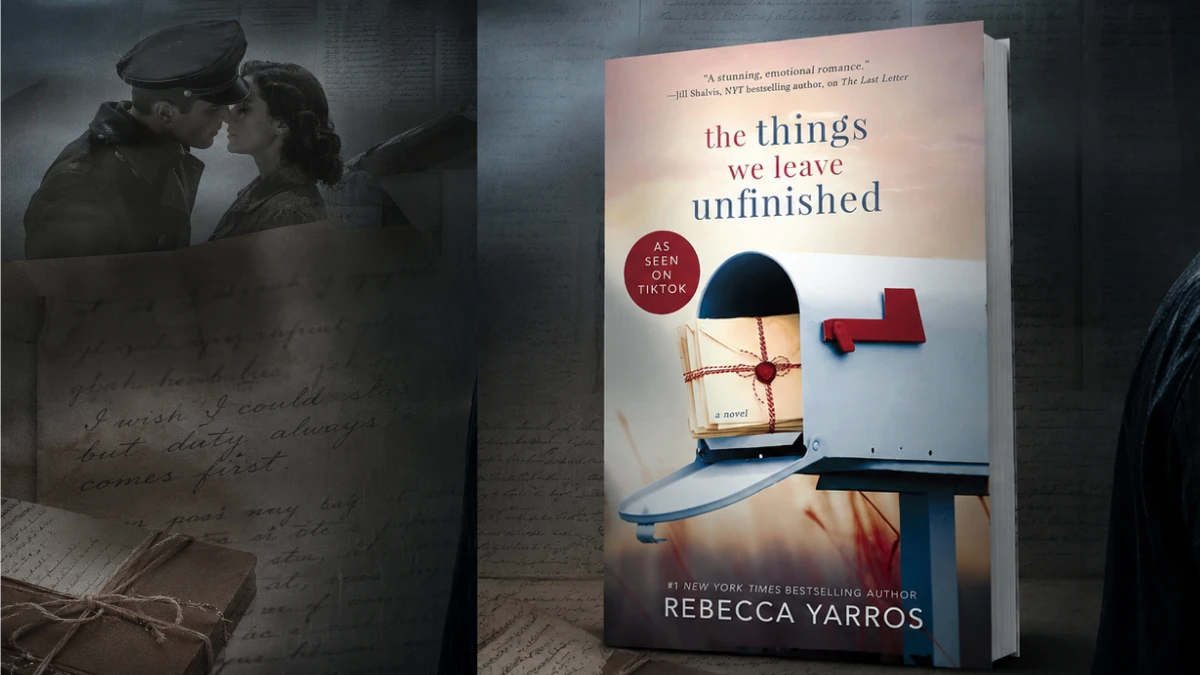
Deadline’s Katie Campione reported on July 16, 2025, that Lionsgate had optioned Yarros’ 2021 romance novel for a feature-film adaptation. The report confirmed Arash Amel as screenwriter and Todd Lieberman as producer through Hidden Pictures. Deadline also described the story’s central setup: Georgia Stanton returns home after a public divorce and reluctantly works with a bestselling author to complete her late great-grandmother’s unfinished World War II love story.
The Story Feels More Visceral Than Most Romance Adaptations
The film follows Georgia Stanton after her marriage collapses, forcing her back home, where she works with bestselling author Noah Harrison to finish her late great-grandmother’s unfinished manuscript. Buried inside that manuscript is a World War II love story still haunting later generations decades afterward.
That summary sounds elegant and romantic.
The actual emotional material is messier. Characters do not communicate cleanly. They repeat the same mistakes while convincing themselves they have changed. Certain arguments do not feel dramatic in a polished movie sense. They feel familiar, quietly ugly, and uncomfortable in ways that resemble real relationships.
That is where the adaptation could become compelling.
The story moves between a contemporary romance and a wartime love story, allowing the film to examine how unfinished relationships continue shaping people who were not even present when those relationships began. The past is not simply background decoration. It becomes part of the emotional pressure surrounding Georgia and Noah.
Modern romance adaptations often rush through that kind of material because they are desperate to reach the chemistry, the kiss, or the sweeping emotional payoff. The Things We Leave Unfinished has more substance if it allows the bitterness and uncertainty to remain visible.
Lionsgate Has To Avoid Making The Movie Too Polished
The initial development news came from Deadline, which confirmed Amel as the screenwriter and Lieberman as producer. Yarros is also attached as an executive producer through Full Measures Productions, while Amel will executive produce as well.
The screenplay’s tone matters more than casting right now.
If the adaptation gets cleaned up too aggressively, the entire thing could lose its identity. The novel works because scenes linger awkwardly. Characters stay bitter longer than audiences expect. Emotional tension hangs around instead of disappearing after one speech and a piano track.
Amel’s previous writing credits include A Private War and The Ministry of Ungentlemanly Warfare, which do not immediately suggest a conventional romance specialist. That could be useful here. The material needs a writer who understands structure and emotional stakes without sanding away the sharper edges.
A lot of Hollywood romance movies now feel like they already know exactly how audiences are supposed to react before the scene even starts. Every reaction lands perfectly. Every emotional beat explains itself. The Things We Leave Unfinished could work better if it allows moments to remain unresolved.
Especially the World War II storyline.
Quiet train stations. Half-finished conversations. People pretending they are fine while clearly collapsing internally. The atmosphere in those sections already feels cinematic without needing to become overly grand. Not loud exactly. Just heavy in a lingering way.
Thea Sharrock’s Attachment Gives The Project A Clearer Direction
The project gained another major creative addition in 2026. The Hollywood Reporter reported on May 26, 2026, that Thea Sharrock had been hired to direct the adaptation. Sharrock previously directed Me Before You and The One and Only Ivan, making her a natural fit for a story that requires both romantic intimacy and a strong emotional connection to its characters.
Her involvement also gives the film a more defined identity. The material needs someone who can handle two timelines without making either feel like a distraction from the other. The contemporary storyline has the sharper romantic friction, while the wartime narrative carries much of the story’s emotional history.
The danger is that the film could divide its attention too evenly and make both timelines feel underdeveloped. The appeal of the novel depends on the way the two stories gradually begin speaking to each other. The adaptation will need to preserve that connection without turning every parallel into an obvious symbolic gesture.
Rebecca Yarros Is Becoming Bigger Than Fantasy Fandom
Between Amazon adapting Fourth Wing, Netflix developing In the Likely Event, and Lionsgate moving forward with The Things We Leave Unfinished, studios clearly see Rebecca Yarros as more than just a fantasy phenomenon.
But this adaptation feels like a different kind of test.
Fantasy projects can rely on spectacle if certain emotional beats do not fully land. Romance dramas cannot hide behind dragons, battles, or elaborate world-building. If the chemistry feels artificial, audiences disconnect immediately.
That makes Georgia and Noah’s relationship central to the film’s success. Their dynamic needs to feel complicated before it becomes romantic. The attraction should grow through irritation, shared responsibility, emotional vulnerability, and the uncomfortable process of learning what the other person is carrying.
The story has something many modern romance adaptations completely lack: emotional residue. Scenes that stay in people’s heads afterward for reasons they cannot fully explain.
Not because they are huge scenes. Because they feel painfully unfinished in a very human way.

Sujal Singh is the Founder and Editor of CineMazze. He covers film news and updates, including casting, production and release announcements, and manages the website. Follow him on Instagram: @itssujalsingh.